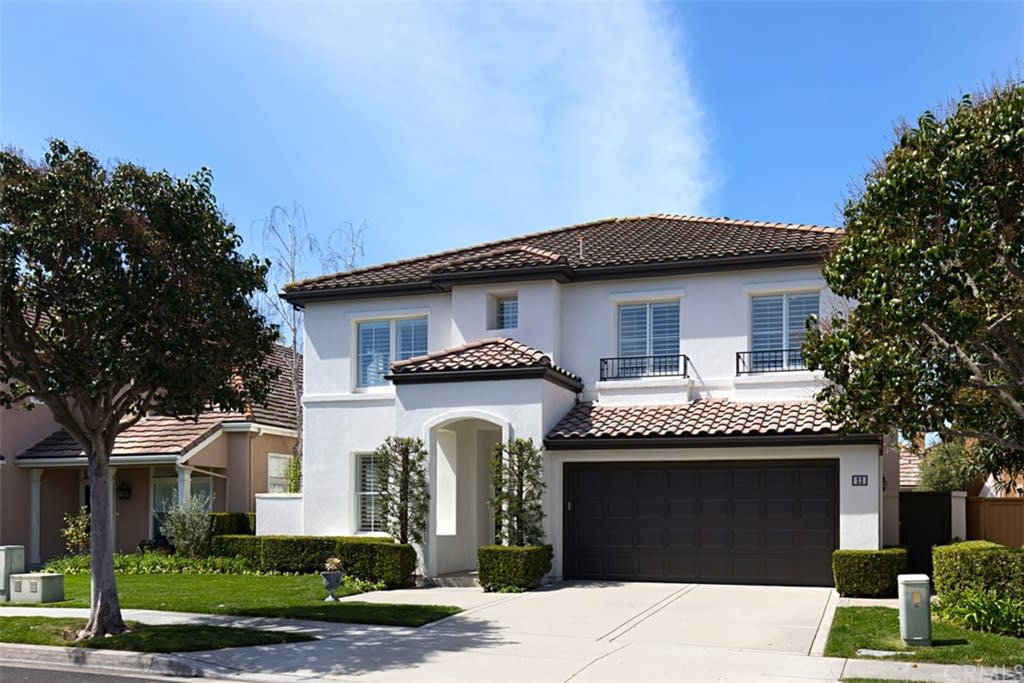
Where to Live in Irvine: A Guide to All 20+ Villages
Megan Varga Group | August 24, 2026
Megan Varga Group | August 24, 2026
Irvine is not a city you shop by street. It is a city you shop by village: roughly thirty of them, each master-planned in a distinct phase between 1965 and now, each with its own architecture, HOA, school feeder path, and tax structure. Two houses of identical size four miles apart can differ by $600 a month in special taxes alone, and most buyers do not learn that until the loan officer runs the numbers.
This is the full list, grouped by when each village was built, because era drives nearly everything else here.
Pro tip: Choose by era, not by price. Irvine's established villages, such as Turtle Rock, University Park, Woodbridge, Northwood, El Camino Real, offer larger lots, mature trees, and no Mello-Roos. The newer villages, including Eastwood, Cypress Village, Portola Springs, and Great Park, offer current construction and heavy amenities with a special tax attached. Turtle Ridge, Quail Hill, and Woodbury sit in between.
Start with the four groups below. They sort the city more usefully than price does, because price bands overlap almost completely — you can spend $1.4 million in a 1975 Woodbridge tract or a 2018 Great Park townhome, and you will be buying two entirely different things.
Established villages (1965–1990) — bigger lots, mature landscaping, no special tax district, and homes that will need updating. Turtle Rock, University Park, Woodbridge, Northwood, El Camino Real, Deerfield, Culverdale.
The 1990s–2000s middle — smaller lots, newer systems, and an assessment district on most parcels. Oak Creek, Westpark, Northpark, Quail Hill, Turtle Ridge, Woodbury.
New master-planned (2013–present) — current construction, the best amenities in the city, Mello-Roos, and dues on top. Cypress Village, Eastwood, Portola Springs, Orchard Hills, the Great Park Neighborhoods.
Guard-gated luxury — Shady Canyon, Hidden Canyon, Altair, and the Groves at Orchard Hills. Custom and semi-custom, a separate market from the rest of the city.
For context on how this compares with the coast, our guide to the best neighborhoods in Newport Beach covers the other half of the market, and the Orange County neighborhood pages map both visually.
One number worth setting down before the table: the average Irvine home value was $1,308,421 as of June 2026, up 2.1% year over year (Zillow, checked August 2026), while Redfin put the median sale price at $1.6 million over the three months ending June 2026, down 1.8%, with homes averaging 43 days on market (Redfin, checked August 2026). The two sources disagree because they measure different things — one is a valuation index across all homes, the other is what actually closed. Treat both as weather reports, not appraisals.
Tier key (Irvine scale): A = under $1M · B = 1M–1.5M · C = 1.5M–2.5M · D = 2.5M–4M · E = $4M+
Note that this scale is specific to Irvine. It is not the scale used in our Newport Beach guide, because a single scale across both cities would put two-thirds of Irvine in one band and tell you nothing.
Special tax column: district numbers come from the City of Irvine's published list of Community Facilities Districts and 1913/1915 Act assessment districts (checked August 2026). "None" means the village predates district financing. Districts vary parcel by parcel within a village — verify any specific address before writing an offer.
Tiers reflect general sale ranges as of August 2026.
Most guides treat Irvine school assignment as fixed. It is not, and IUSD has published two changes that will affect buyers making decisions right now.
The first: beginning in Fall 2028, ninth-grade students living in Woodbury will be assigned to Irvine High School rather than Portola (IUSD, checked August 2026). If you are buying in Woodbury with a child currently in elementary school, that is your family's assignment, not the one on the listing sheet.
The second: the district's 2026 boundary adjustment moved the Stonegate Elementary community from Portola High to Northwood High, and from Jeffrey Trail Middle to Sierra Vista Middle, to relieve enrollment pressure east of the 5. Cypress Village stayed whole at Irvine High.
Confirm any address against IUSD's boundaries and assignments page before you write an offer, and check the board agenda if you are near an edge. Boundaries in a growing district are a moving target, and a listing agent's school claim is not a source.
Buyers ask whether a village "has Mello-Roos," and get a yes or no. The real answer has three states.
Some villages have a Community Facilities District — true Mello-Roos, formed under the 1982 act. Great Park (CFD 2013-3) and Columbus Grove (CFD 2005-2) are the clearest examples. A CFD sets a maximum annual tax rate that can escalate, and the tax can outlive the bonds.
Others sit in a 1913/1915 Act assessment district, which is a different mechanism that most agents still call Mello-Roos. Turtle Ridge, Quail Hill, and Shady Canyon share Assessment District 00-18. Woodbury is AD 03-19, Stonegate AD 07-22, Laguna Altura AD 10-23. An assessment district sets a fixed lien per parcel that pays down over the term of the bonds — meaning it has an end date, and in the older districts that end may be close.
And the established villages have neither, because they were built before Proposition 13 made this kind of financing necessary.
That distinction is worth real money at resale, and it is the sort of thing that only becomes legible once you have watched a city build out in phases. Megan holds a Master's in Real Estate Development from USC, which is the background that makes a CFD rate-and-method document readable rather than intimidating — useful here mainly because the difference between a district with eight years left and one with twenty-eight is not printed on any listing.
The established villages get you a lot. Turtle Rock and Woodbridge lots run substantially larger than anything built after 2005, the trees are fifty years old, and there is no special tax line on the bill. You will also be buying 1970s systems, 1970s bathrooms, and in many cases a floor plan that assumes a family who eats in a dining room.
The new villages invert every one of those. Eastwood, Cypress Village, and the Great Park Neighborhoods give you current construction, parks and pools that are genuinely excellent, and homes that need nothing. The lots are small, the houses sit close together, and between Mello-Roos and HOA dues the monthly carrying cost runs meaningfully above a comparable older home at the same purchase price. Lenders count the special tax in your debt-to-income ratio, which means it also reduces what you qualify for.
Turtle Ridge and Quail Hill are where a lot of buyers land, and it is not an accident — 2000s construction, University High feeder path, canyon and trail access, and an assessment district rather than an open-ended CFD.
Choose in this order: era group, then school feeder path, then monthly cost including the special tax and dues, then purchase price. Buyers who start with a portal price filter tour a 1972 Woodbridge single-story and a 2019 Solis Park detached condo in the same afternoon and learn nothing from either.
Then go walk it on a weekday at 5:30 p.m. Irvine villages are quiet in a way that is hard to distinguish from empty when you visit at 11 a.m. on a Saturday, and the two are very different to live in.
Be ready to move quickly when you find it. One family we worked with had rented in the area first, then decided to buy — they were watching for the right house rather than the right week, and when it came up they ended up bidding against twenty-six other offers and still got it. That outcome is not luck. It comes from being pre-approved, knowing the village well enough to recognize the house in the first two hours it exists, and writing terms that read as certain to a seller. Volume in a market where inventory turns this fast is what makes that possible, and the range across these villages is visible in the Megan Varga Group portfolio.
If you already own in Irvine and are working out what a move would cost, start with a confidential home valuation before you shop.
The villages built before district financing became standard: University Park, Turtle Rock, Woodbridge, El Camino Real, Deerfield, Culverdale, Rancho San Joaquin, University Town Center, and most of Northwood. Verify by parcel, since tract edges do not always follow village lines.
All five IUSD comprehensive high schools perform strongly, so the honest answer is that the difference between them is smaller than the difference between two families' priorities. University High draws the established southern villages, Northwood the north, Portola the newer eastern villages. Pick the village you want to live in and confirm the assignment by address.
Attached homes in the older villages — University Town Center, Rancho San Joaquin, Culverdale, Orangetree, and parts of Woodbridge and El Camino Real. These are generally the entry points into the city and carry no special tax district.
Turtle Rock for a larger lot, mature neighborhood, and no special assessment. Turtle Ridge for 2000s construction, gated enclaves, and newer systems. Both feed University High. Explore our neighborhood guide to Turtle Ridge here.
It varies by district and parcel, and the only reliable figure is the one on the specific property's tax bill. Pull the parcel record before you write an offer rather than relying on a listing estimate — and remember that lenders count it toward your qualifying ratio.
Different products at different price points. Irvine gets you newer construction, master-planned amenities, and IUSD; Newport Beach gets you the coast and older housing stock at roughly double the median.
Thirty-odd villages, four eras, five high schools, and a special tax structure that changes every time the city expanded east. That is a lot of variables for a decision most people make in about six weekends.
The short version: older villages give you land and no special tax and ask you to renovate. Newer villages give you a finished house and better amenities and ask you for a few hundred dollars a month in perpetuity. Neither is the right answer generally, and both are the right answer for somebody.
If you are weighing two or three villages and want a straight read on which fits what you are actually trying to do, get in touch with the Megan Varga Group. Sellers deciding whether now is the moment should start with a valuation.
Megan Varga Group's excellent reputation, integrity and loyal client base ensures you are working with professionals you can trust. Contact us to put our extensive education, wealth of experience, and proven track record to work for you.
Megan Varga Group is affiliated with Compass, a licensed real estate broker in California, and abides by Equal Housing Opportunity laws. All material presented herein is intended for informational purposes only. Information is compiled from sources deemed reliable but is subject to errors, omissions, changes in price, condition, sale, or withdrawal without notice. All measurements and square footages are approximate. This is not intended to solicit property already listed. Nothing herein shall be construed as legal, accounting or other professional advice outside the realm of real estate brokerage.
Megan Varga Group’s excellent reputation, integrity and loyal client base ensures you are working with professionals you can trust. Let Megan Varga Group's extensive education, wealth of experience, and proven track go to work for you.
CONTACT US